Hey folks!
Hosting a website on a disposable vape
low cost of repurposing older, cheap Chinese LTE dongles/boards (like the MSM8916 Snapdragon 410) which cost under $10 can repurposed into either a portabel linux mechine or a functional web-server.
cheap and powerful devices one can also look at Chinese UZ801 4G LTE (Qualcomm MSM8916) dongles. They cost like only $4-5 and pack quite impressive HW: 4GB eMMC, 512MB RAM, actual 4G modem sometimes with 2 sim switching support. Since it’s actually old Android SOC there is even GPU and GPS in there.if you looking for hardware platform for weird homelab projects that’s can be it.(original discussions)
Self-hosting a website at home is technically feasible and can be made reasonably secure using techniques like VLANs and firewalls.(original discussions)
Recent npm supply chain attacks
- Security Risks of Post-Install Scripts: The ability for malicious packages to execute arbitrary code during npm install is identified as a major security flaw.
- Need for Enhanced Verification Mechanisms: There is a strong advocacy for mandatory cryptographic signatures, provenance tracking (like Sigstore), and robust 2FA (WebAuthn, physical keys) to secure package publishing and prevent unauthorized changes.
- Dependency Complexity and Ecosystem Vulnerabilities: The massive number of packages, lack of scrutiny, broad usage, and complex dependency trees are cited as key factors making npm vulnerable to widespread supply chain attacks.
- Mitigation Strategies (Including Alternatives): Comments discuss various potential solutions, including using tools like
pnpm, sandboxing (bubblewrap, Docker), stricter dependency management, or even considering alternatives like HTMX to reduce JavaScript reliance.
Show HN: A store that generates products from anything you type in search
There is an “anycrap shop” website generating absurd, useless, and often unintentionally humorous products using AI.
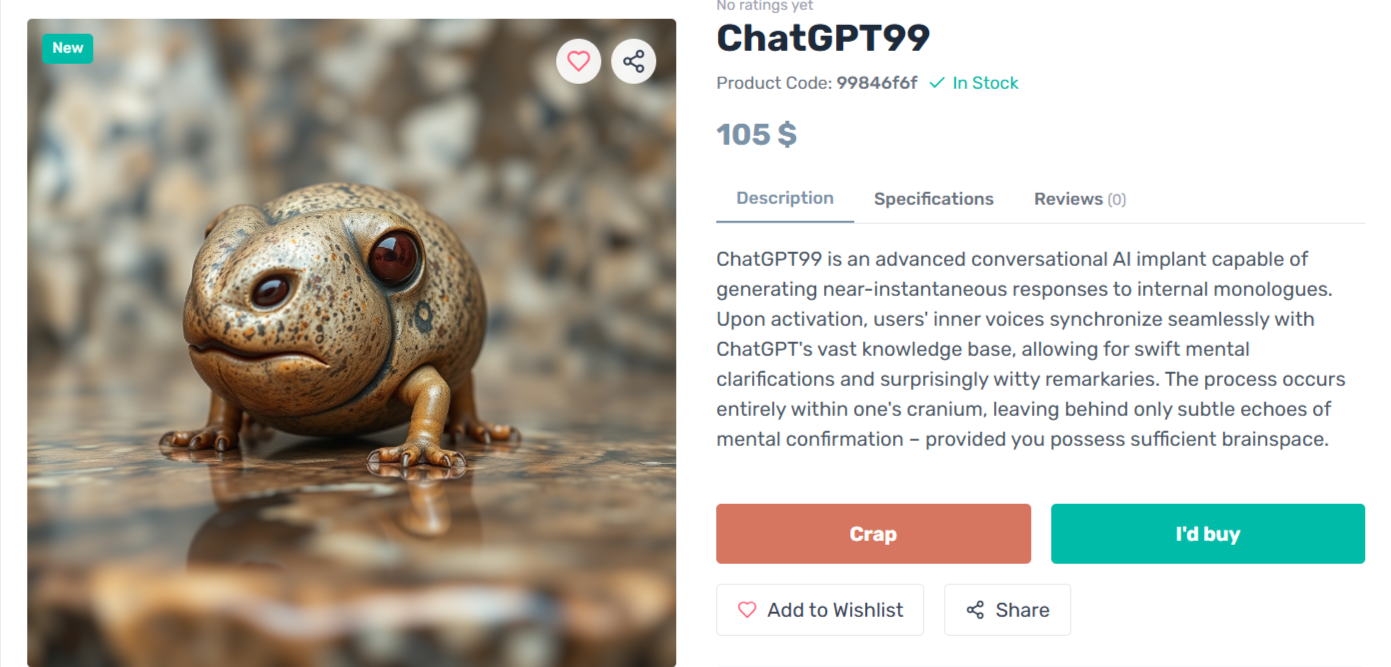
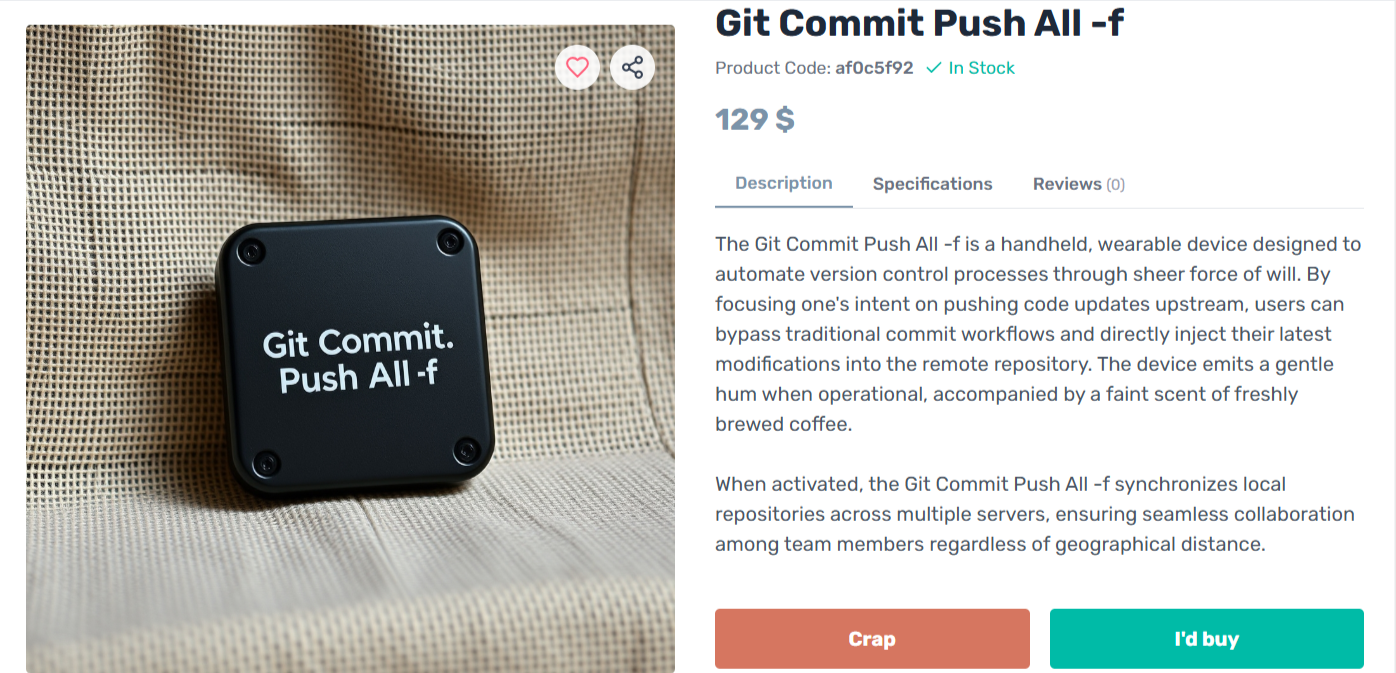
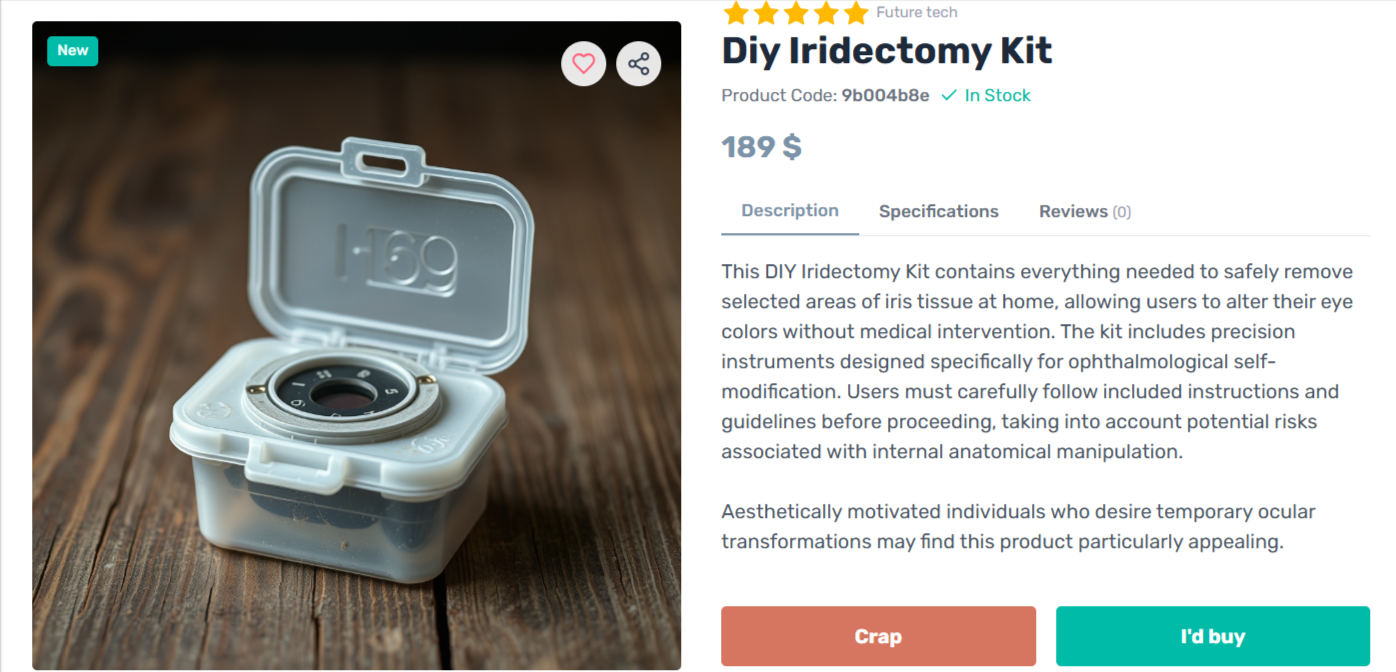
This might be a good product idea, and it could generate income if done correctly


50 things you can do with a Software Defined Radio
Personal Tech Exploration & Unique Applications: Sharing stories of early tech exposure and using devices like SDRs for monitoring and decoding various signals (weather satellites, pagers, radio) including receiving various digital and analog signals, decoding GPS, intercepting broadcasts, performing security research, interacting with aviation systems, capturing infrared signals, and implementing passive radar.
Satellite Images Access: you can get images from the satellites that all this information is stored in electromagnetic waves.(original discussions)
-
This is Nano-banana curated image gallery, they has collected stunning images and prompts generated by Nano-banana in various task scenarios.
- Technical Capabilities & Limitations: Comments describe the tool’s ability to alter details (positive aspect) but express significant frustration with rendering inaccuracies (e.g., objects, buildings, text), inconsistencies, and specific limitations like transparency issues.
- Ethical Concerns & Societal Impact: Users raise serious concerns about potential dangers, misuse, creation of disinformation, and inappropriate content. There are also philosophical debates about AI’s impact on creativity, appropriation, and trust online.
- Reliability & Practical Use: Many commenters report significant, frequent, and inconsistent failures with the tool, citing issues like aspect ratio mismatches, poor quality, bias, and refusal to modify images. They generally conclude the tool is unreliable for production use, despite some niche potential.
- Critique of AI Demonstrations: A recurring theme is the criticism of AI image generation demos, viewing them as often showcasing cherry-picked successes, containing numerous errors, and relying on subjective evaluation.
I curated these content and insight with my own tool wthin like just about 10 mins baesed on my own interests and You can find many more valuable articles on HN and instantly filter them for insights with my tool: https://hpyhn.xyz
Thanks for reading! What do you think of these learnings?