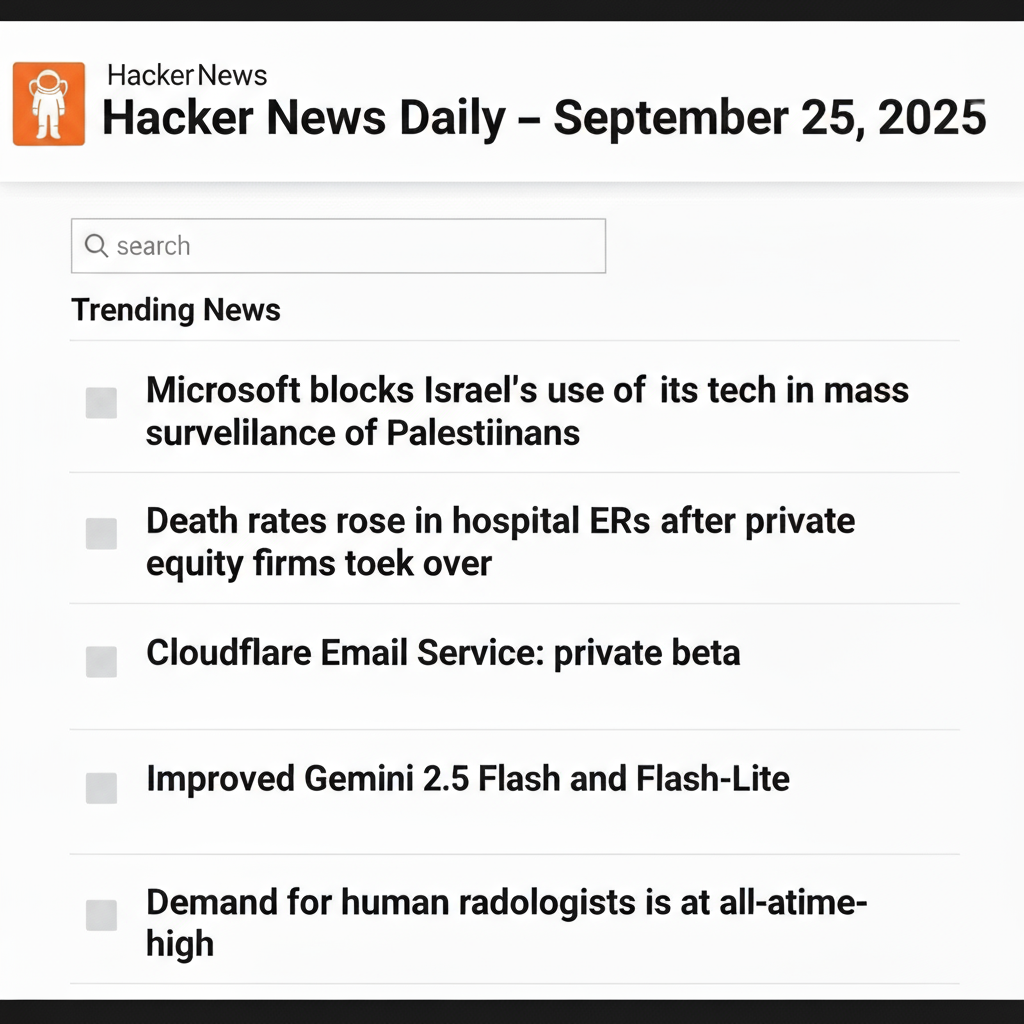
Microsoft blocks Israel’s use of its tech in mass surveillance of Palestinians
Microsoft terminates access to its technology for Israel’s surveillance program targeting Palestinians, citing violations of its terms of service.

Insights from People’s discussions:
- Surveillance Effectiveness and Ethics: Debates the real-world utility of surveillance in preventing attacks, its potential for misuse, and the ethical responsibilities of tech companies providing such tools, often expressing skepticism about its effectiveness and concern over centralized power. (Sentiment: Negative/Mixed)
- Conflict Context and Genocide Accusations: Strongly asserts Israel’s actions constitute genocide in Gaza, referencing legal rulings and UN reports, while countering views by questioning the definition and evidence. Calls for accountability of involved tech companies. (Sentiment: Strongly Negative)
- Intelligence Failures and Security: Questions why intelligence warnings about an impending attack were ignored and argues that insufficient troop movements and disregard for border activity contributed to the October 7th attack. (Sentiment: Negative)
- Critique of Online Discourse: Calls out unsubstantiated conspiracy theories prevalent on Hacker News, emphasizes the importance of reading articles before commenting, and discusses broader issues of misinformation and division online. (Sentiment: Negative/Moderate)
Death rates rose in hospital ERs after private equity firms took over
A study reveals that private equity ownership of hospitals is linked to increased patient death rates and reduced staffing, driven by financial strategies focused on cost-cutting and debt management.
Insights from People’s discussions:
- Critique of Private Equity Impact: Comments strongly criticize private equity firms for acquiring healthcare providers, leading to negative outcomes like reduced services, increased prices, job cuts, and a focus on financial engineering over patient care. (Sentiment: Negative)
- Workforce Shortages and Systemic Issues: There is a recurring theme blaming restricted residency spots and immigration policies for physician shortages, arguing these create artificial scarcity and drive up costs, while also highlighting the growing reliance on nurse practitioners and physician assistants. (Sentiment: Negative)
- Fundamental Market Incompatibility & Need for Government Intervention: Many commenters argue that healthcare cannot function effectively under traditional free market principles due to its essential nature, information asymmetry, and the indirect payment model (insurance), concluding that government intervention or a single-payer system is necessary to ensure affordability and accessibility. (Sentiment: Negative)
Cloudflare Email Service: private beta
Cloudflare announces the private beta of a new Email Sending service integrated with Cloudflare Workers, simplifying transactional email sending for developers.

Insights from People’s discussions:
- Alternatives to Gmail/Transactional Services: Fastmail is seen as a positive alternative for personal use but criticized for its complex API for bulk/transactional needs. Cloudflare’s new service is viewed positively for its simplicity and competitive pricing but negatively due to past actions, potential pricing, and competition. (Sentiment: Mixed)
- Pricing & Deliverability Issues: SendGrid’s new pricing is widely criticized as too expensive, prompting searches for cheaper alternatives. Users express frustration with ongoing email delivery problems caused by abuse (on Cloudflare, SendGrid) and technical changes (like ARC enforcement), impacting deliverability. (Sentiment: Negative)
- Self-Hosting vs. Commercial Services: Running one’s own mail server is seen as manageable by some with basic setup but challenging regarding deliverability, especially with cloud IPs. Commercial email services are often preferred for transactional needs despite drawbacks. (Sentiment: Mixed - Positive for self-hosting potential, Negative for deliverability challenges)
- Email’s State & Alternatives: Email’s dominance is acknowledged but users express frustration with its decline due to privacy and centralization issues. Alternatives like push notifications or SMS are suggested as preferable for certain use cases. (Sentiment: Negative towards email’s state, Positive towards alternatives)
Improved Gemini 2.5 Flash and Flash-Lite
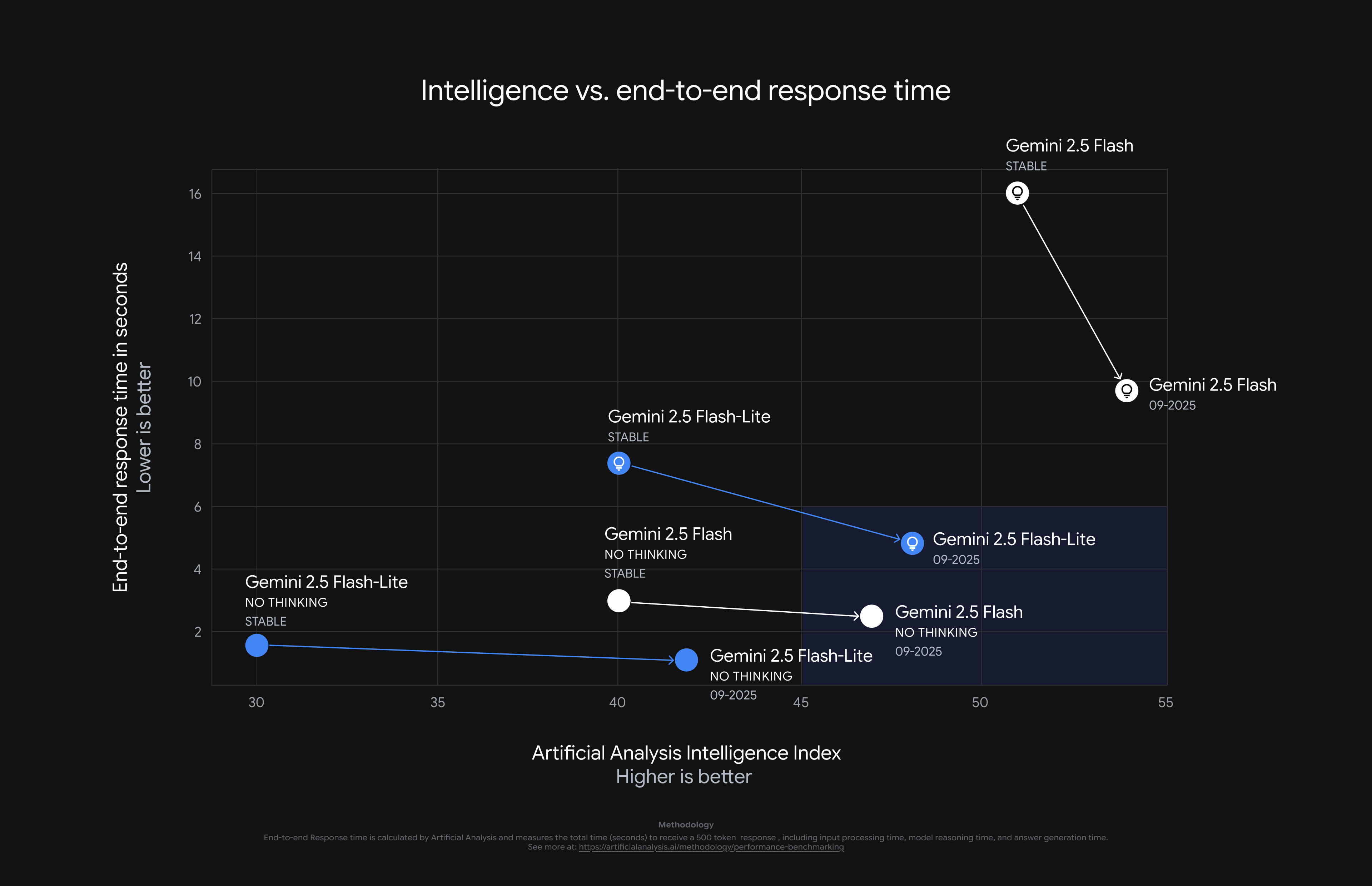
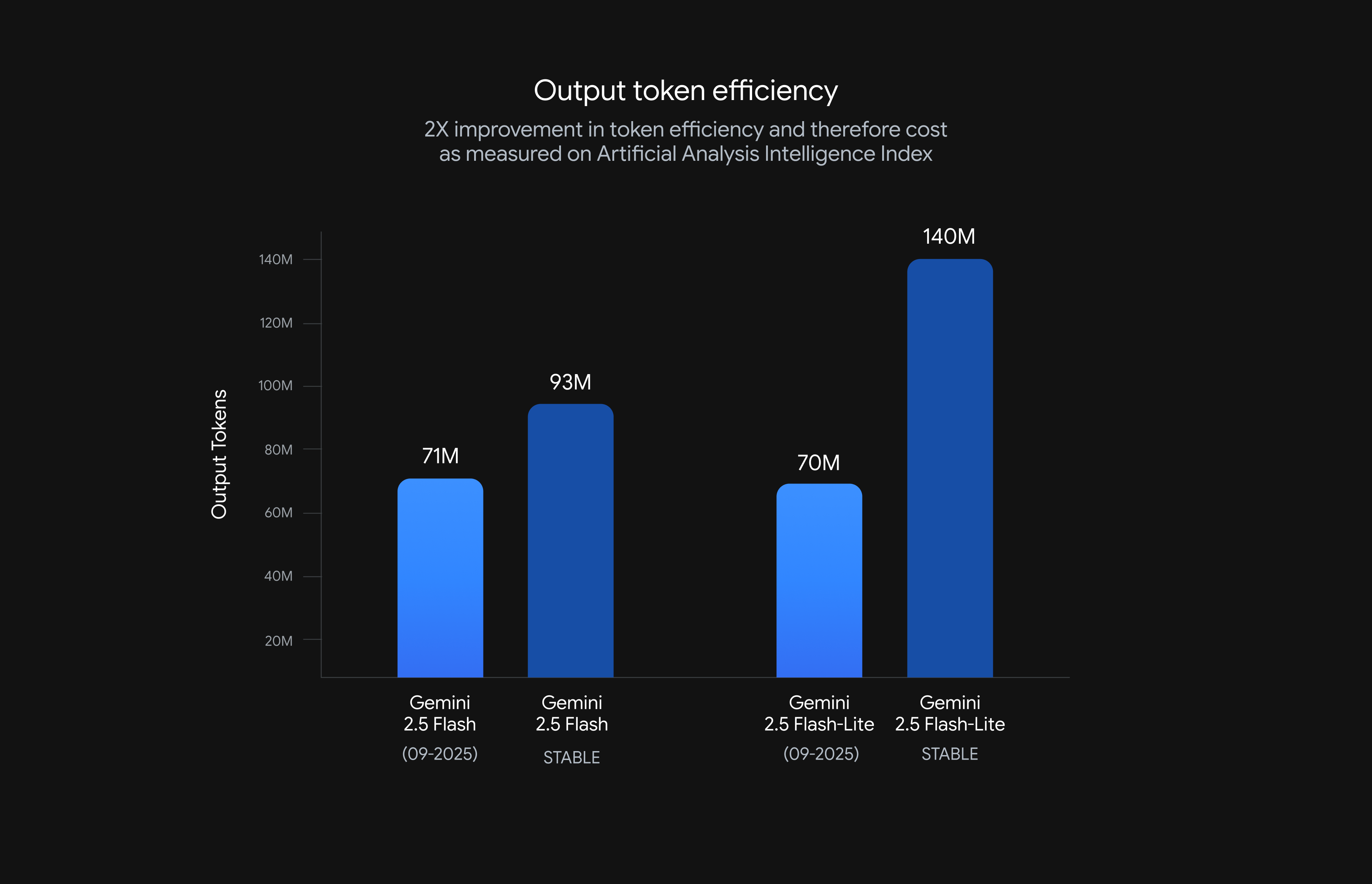
Google announces updated Gemini 2.5 Flash and Flash-Lite models with enhanced quality, efficiency, and multimodal capabilities.
Insights from People’s discussions:
- Frustration with Inconsistent Versioning: Users expressed negative sentiment regarding the lack of standard versioning across AI models, making tracking and comparison difficult.
- Positive/Negative Feedback for Gemini 2.5 Flash: A mixed sentiment viewpoint, highlighting its speed, cost, image recognition, and context handling (Positive) while noting weaknesses in complex reasoning and reliability (Negative).
- Confusion Regarding Naming Conventions and Rumored Releases: Negative sentiment expressed over the unclear naming conventions (e.g., Flash vs Pro) and confusion surrounding unconfirmed rumors about new model releases like Gemini 3 Pro.
- Grok’s Popularity and Performance Issues: A viewpoint discussing Grok’s current popularity and contrasting it with the performance decline noted in Gemini 2.6, reflecting a mix of observation and negative sentiment towards Gemini 2.6’s recent quality.
Demand for human radiologists is at an all-time high
An analysis of how AI is being integrated into radiology, highlighting its current limitations, regulatory hurdles, and the reasons why it hasn’t replaced human radiologists despite its capabilities.


Insights from People’s discussions:
- AI’s Role in Healthcare: AI can augment radiologists and improve workflow efficiency, but it is unlikely to fully replace them due to limitations in handling real-world complexity, non-analytical tasks, and regulatory hurdles. (Sentiment: Cautious Optimism / Concern)
- Skepticism Towards AI Predictions: There is significant skepticism about overly optimistic and short-term predictions regarding AI’s impact on professions like radiology and its rapid progress in areas like fully autonomous driving, often citing challenges like edge cases and liability. (Sentiment: Skeptical / Cautious)
- Implementation Hurdles: Implementing AI in healthcare faces significant hurdles due to liability concerns, established malpractice insurance systems, complex workflows, and profit motives, which slow down innovation and cost-saving potential despite AI’s potential advantages. (Sentiment: Concern / Cautious)